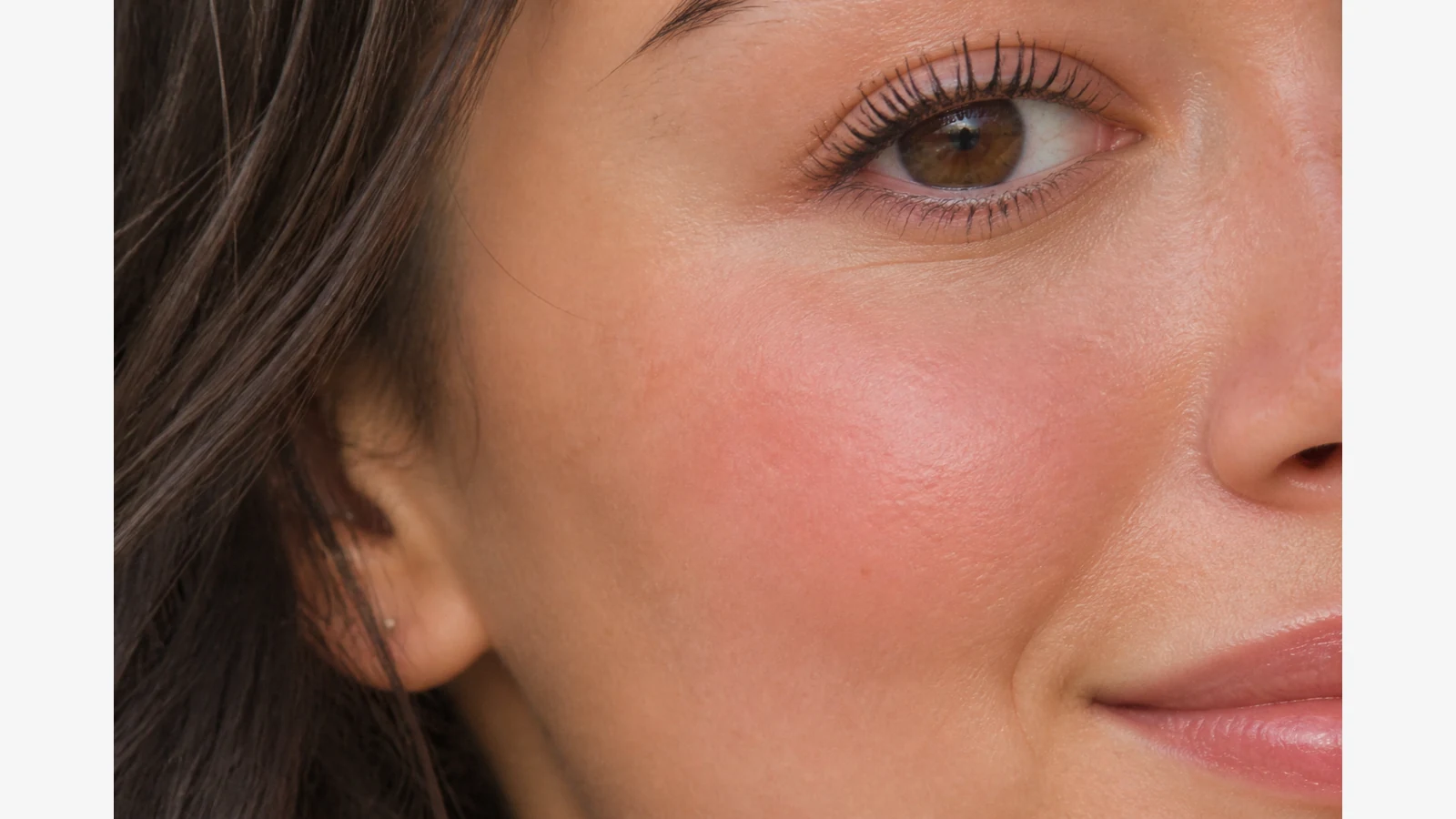
Blush that does not look powdery: skin-like flush vs chalk cast
Blush looks powdery when pigment floats on dry or textured zones instead of reading as colour coming from within. If daylight shows chalk at the smile line, a cream or liquid formula plus careful prep is usually a better first fix than adding more powder colour.
Define the powder cast clearly
A skin-like flush keeps visible texture but still looks like blood-tone under the surface. A powder cast shows grain, especially where skin is dry or where powder bronzer already sits. That is a finish problem, not a moral judgment about pores or texture.
What UK formula guides say about cream, liquid and powder
e.l.f. Cosmetics UK’s formula guide describes cream and liquid blush as dewy, skin-melting alternatives to classic powder. VIEVE’s comparison contrasts radiant cream/liquid finishes with powder’s matte or satin polish and notes skin-type fit. Glamour UK dry-skin testing prefers liquid when powder turns cakey over bronzer because liquid blends more seamlessly.
Prep and order so liquid colour does not pill
- Moisturise dry flanks and wait until skin feels settled—not wet.
- Keep foundation thin on textured cheeks.
- Apply a tiny liquid or cream amount and pat; avoid rubbing flakes into pills.
- If you must set, use a whisper of translucent powder only where oil breaks up colour—not a full chalky blanket over the blush.
When a tiny powder set helps versus when it recreates chalk
A pinpoint set on the outer cheek can reduce migration on oilier zones. Re-dusting powder blush on top of an already powdery look usually recreates the cast you were trying to escape.
Judge finish in natural light before you commute
Stand by a window after blending. If you still see powder grain, remove with a clean sponge bounce and switch formula family rather than stacking more powder pigment. For dry-skin technique detail, see liquid blush for dry skin UK; for no-brush blending, see blend liquid blush without a brush.