Liquid Blush For Dry Skin Uk
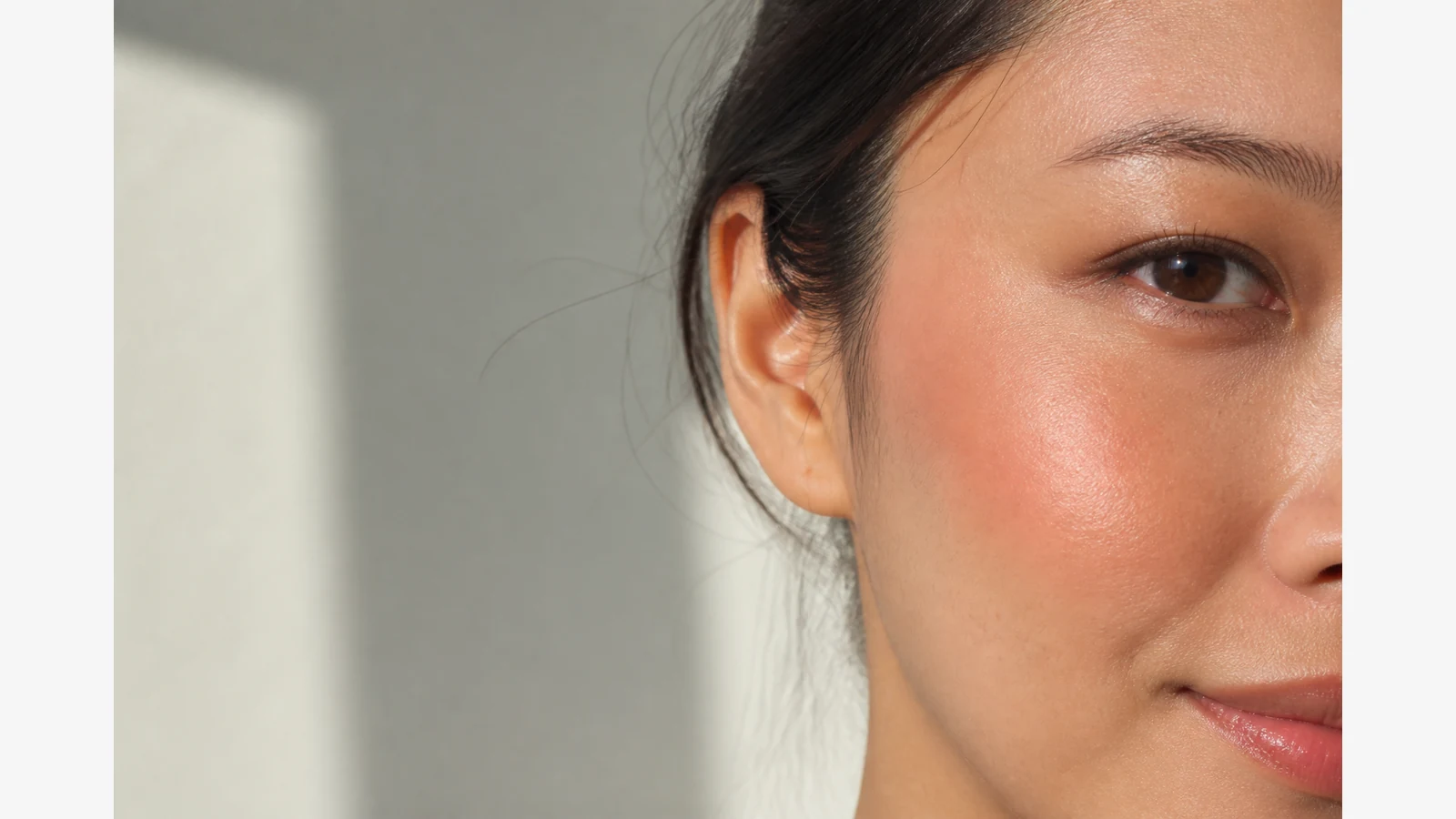
If powder blush catches on dry patches around your apples and nose flanks in natural light, a liquid or cream formula is often the cleaner switch for UK dry or textured skin—because colour can melt into base instead of sitting as floating pigment.
That preference shows up repeatedly in UK beauty coverage: dry-skin testers favour liquid blush when powder looks cakey or chalky over texture, while brand editorials describe cream and liquid finishes as radiant alternatives to powder polish.
What “melting in” means versus powder sitting on texture
Powder blush is designed to lay a soft-focus film of pigment on top of skin. On moist, even cheeks that can look polished. On dry flanks, smile lines, or fine texture, the same film reads as powder grain—especially under window light or phone flash.
Liquid and cream blush are built to shear out and sit closer to the skin’s surface. Glamour UK’s liquid blush round-up notes that dry-skin editors often prefer liquid because it melts into skin rather than sitting on top, and highlights hydration-forward formulas that blend more seamlessly. VIEVE’s cream vs liquid vs powder guide makes the same category contrast: cream and liquid read radiant, while powder leans matte or satin polish, with cream often flagged as friendlier for dry or mature skin.
None of that is a medical claim about eczema or dermatitis—only a finish and texture observation shoppers can check themselves in daylight.
A finger-friendly order over moisturised foundation
For dry or textured cheeks, keep the sequence simple:
- Moisturise and let skin settle before base.
- Apply foundation or tinted moisturiser thinly on the cheeks—avoid a heavy cake that later pills under liquid colour.
- Place a rice-grain amount of liquid blush on the back of your hand first, then tap one small transfer onto each apple.
- Blend upward and outward toward the temple with a clean fingertip while the product is still movable.
- Stop once the edge disappears; build a second thin layer only if you still want more colour.
UK retail liquid blush copy often markets lightweight, buildable, luminous textures—for example NARS UK’s Afterglow Liquid Blush listing describes a luminous, buildable formula with sodium hyaluronate—useful as category language, not as a guarantee that every bottle on the market feels identical.
Dewy colour versus oily shine on a commute day
A skin-like flush should look like colour coming from within. Oily shine looks like light bouncing off a film on the T-zone or mid-cheek. After blending, wait a few minutes, then check in natural light:
- If colour is even and the surface feels lightly settled—not tacky enough to catch hair—you have a workable dry-down.
- If the cheek still feels wet or product lifts when you lightly press with a clean finger, give it more time or use a smaller first dose next time.
- If only the centre of the face looks shiny while blush edges stay soft, that is usually sebum, not blush “glow”.
For related technique, see our guide on choosing blush that does not look powdery and the beginner dosing practice in how much liquid blush a beginner should use.
Soft peach and rose builds without over-promising wear
Start with a sheer peach or soft rose wash for daytime, then add a second pinpoint only on the high point of the cheek if you need evening depth. Do not rely on unverified “all-day” wear claims in marketing copy; judge lasting power on your own commute and office conditions.
If you want more colour options without buying four separate singles, read why UK beginners often prefer a buildable multi-shade route.
Quick checklist before you leave the house
- Natural-light check for powder grain at the smile line
- Temple-direction blend so colour does not stop as a round apple patch
- Hair-touch test for unwanted tack
- One thin layer first; build only if needed